In ayahuasca healing culture, the topic of dieta or “dieting master/teacher” plants comes up frequently.
Among Westerners like myself, there can be curiosity and confusion about this practice. This is understandable, as the tradition of dieting plants is associated with complex bodies of knowledge that are deeply rooted in Indigenous cultures, communities, and cosmologies.
I remember first hearing about dietas years ago when carpooling to an underground retreat with a fellow ayahuasca ceremony-goer. When she said she was considering doing a plant diet, I had no idea what she meant. “That sounds weird,” I thought, as she described the process. “Why would I do that?” And yet years later, I found myself drawn to and participating in dieta formats offered to Westerners by Indigenous practitioners in Perú.
Alongside my personal experiences, I’ve learned more about dietas through courses and books by Indigenous and Indigenous-trained Western healers, and anthropology literature. These sources have helped me to start wrapping my brain around the original and contemporary purposes and processes of undertaking dietas. Still, the more I think I’m understanding dietas, the more I realize how much I don’t know. A good exercise in maintaining humility and perspective.
Dietas are a vast and complex topic. This post aims to offer a brief overview from selected Indigenous, Western, and anthropological perspectives, as well as from my own experiences. Inevitably, what I share here is simplified and incomplete, and filtered through my Western, novice-dieter lens. And yet, I hope to offer some basic information with care, respect, and accuracy.
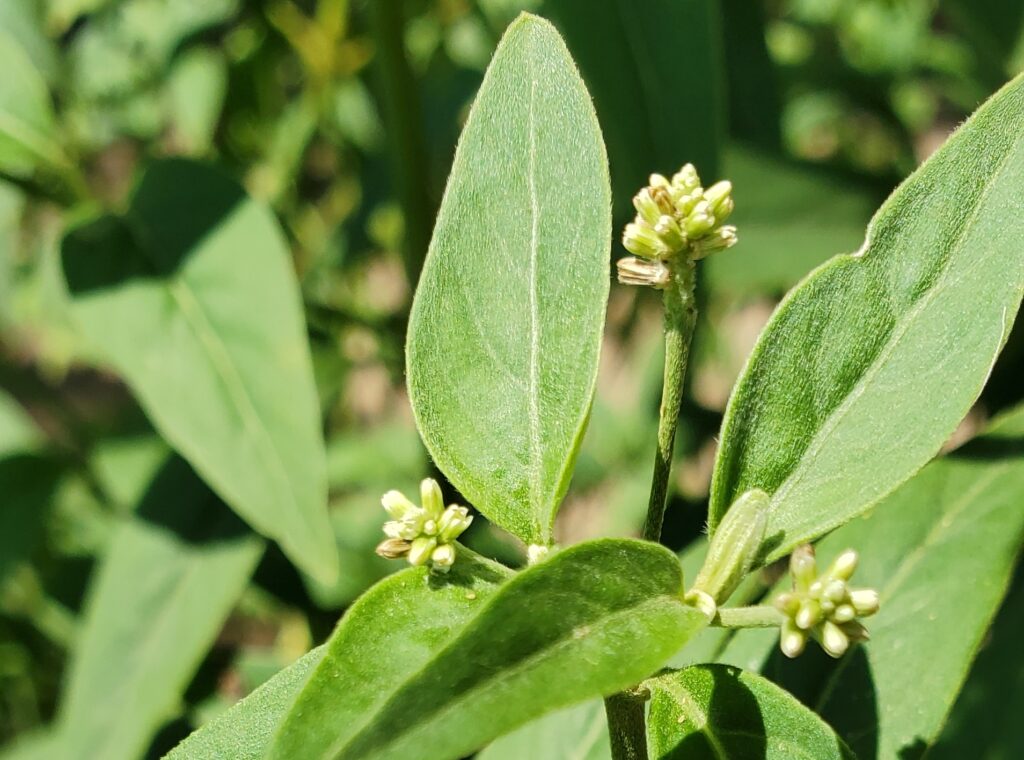
Master plant Marusa (Photograph by author)
Pre- and post-retreat dietary restrictions
In contemporary ayahuasca healing settings, retreat teams commonly prescribe a set of dietary and behavioural restrictions to follow before, during, and after the retreat. Such guidelines can be invoked whether the retreat centre is offering ayahuasca, master/teacher plant dietas, or both, and can vary in content and duration. They can include limiting or eliminating meats (especially pork), dairy, deep fried and fermented foods, sugar, salt, alcohol, street drugs, cigarettes, and/or certain prescription medications. Abstaining from sexual activity (including self-pleasure) and avoiding interpersonal conflict may also be required.
The restrictions are generally understood to serve several purposes, including:
- Cleansing to prepare the body to receive the ayahuasca and/or plant-to-be-dieted
- Demonstrating a serious approach to the ceremony and/or dieting process
- Avoiding influences believed to interfere with or “cross” energetic fields, such as between sexual activity and plant realms
- Safety. For example, some prescription medications are thought to be contraindicated for ayahuasca. Furthermore, tyramine-rich foods may increase the risk of a hypertensive crisis in some individuals. Ongoing scientific research is attempting to clarify these safety considerations.
I’ve attended retreats in Perú and the Pacific Northwest where long lists of restrictions were the norm. Another centre in Perú took a slightly different approach, prescribing only safety-related guidelines (although there were post-retreat dietary ones). On the first day at both Peruvian centres, staff required us to ingest a vomitivo (emetic), which was intended to cleanse the physical and energetic body.
Some groups refer to these pre- and post-retreat protocols as “the dieta.” However, the meaning of dieta with which I’m most familiar relates not to these preparatory protocols, but to the practice of forming and tending to relationships with plants that are teachers.
Indigenous perspectives on dietas
A dieta is a practice originating in Indigenous cultures of the Global South that enables access to teachings from plants. Many purposes are associated with dieting plants, including divination, hunting, consultation with ancestors, healing, and leadership.
Voices of Shipibo-Conibo healers
Dietas are also part of a learning and apprenticeship process for those who intend to work with plants in order to offer healing and protection, and/or practice sorcery1. In Indigenous Shipibo-Conibo communities, healers diet plants to gain and continually deepen their professional competence. Below are a selection of Shipibo onanyabo2 perspectives I’ve encountered regarding teacher plants and dietas:
The diet is what the plant wants to teach you and what you want to learn. ~ Soi (Jorge Ochavano Vasquez)
[W]e are learning directly from the plants – from the root! And this is the medicine that we have, the medicine of our ancestors and our grandparents. From many plants, we’ve learned! ~ Laura López Sánchez and Lila López Sánchez
[T]eachers are plants, and plants are invisible, and one diets for years and years, and only then, depending on what one manages to go through, do icaros3 emerge. And it takes a lot of patience to learn this. ~ José López Sánchez (translation by Google)
Insights from Indigenous-Western collaborations
Dietas are a central theme throughout Trabajar con las Plantas que Tienen Madres: Diálogos con un Onanya Shipibo4, a book of conversations between onanya Maestro José López Sánchez and anthropologist Silvia Mesturini Cappo. In these dialogues, Maestro José frames dietas as a practice of seeking, feeling, and maintaining ancestral relationships with particular plants. Each dieta (which can last weeks, months, or years) involves social isolation, cleansing, and behavioural and nutritional restrictions that allow the practitioner to become familiar with and learn from a plant. Over the course of many years, an onanya accumulates numerous dietas and may come to know up to 100 or more medicinal plants.
As the authors explain:
Being on a diet means learning to feel the plants: to feel what they demand and how they demand it. Plants ‘give tests,’ José explains, to show us ourselves from their point of view: they connect us with our traumas, they show us what needs healing (López Sánchez, Mesturini Cappo, & Sanabria, 2024, p. 16, translation by Google).
The relationship between dieting plants and the songs (icaros) offered to patients by Shipibo-Conibo healers is described in the book Ayahuasca Healing and Science. Soi, also a Shipibo onanya, remarks:
The diet is like going to university… Each plant is like a different course; it teaches something different.… When someone is dieting a plant, an energy is left in their body. The diet, the plant, transfers its power to the healer. The healer afterwards uses this same energy to heal via their voice. That’s the icaro, a transmission from the plant (Aronovich & Labate, 2021, p. 229).
Dietas as the foundation of onanya practice
Thus, for Shipibo-Conibo healers, dietas are the foundational way of gaining knowledge and skills. Dieting is an immersive process of forming and tending to relationships with plants who are teachers, and involves a disciplined, relational practice of listening to what the plants reveal. Over years of dieting, these relationships deepen into a vast body of living knowledge that shapes the practitioner’s healing capacities. These abilities are expressed most clearly through the icaros that emerge from the plants themselves. The plants impart what requires healing, and give rise to the icaros that carry the plants’ energy into healing spaces.
As Maestro José notes:
[T]he plants are the doctors… We are the intermediaries of support. We have learned, yes, but we are human beings, we have our mistakes, our feelings. We are a means, we are a bridge to open all that up. We are doctors, too, but the ones who heal are the plants (López Sánchez, Mesturini Cappo, & Sanabria, 2024, p. 65, translation by Google).
Contemporary dietas for international populations
Originally, only the healing practitioner undertook dietas; the patient typically did not. But, as interest in participating in dietas has increased among Westerners, practitioners and centers have adapted the dieting process to meet the expectations and needs of international participants.
Evolving practices for foreign dieteros
Modern dietas for international clientele vary widely across retreat centres in the Global South. Some centres are owned by Indigenous healers; others are foreign-owned, sometimes employing Indigenous practitioners and sometimes not. (The issues of commodification, commercialization, and technification of both dietas and ayahuasca are substantial topics in their own right and beyond the scope of this post5.)
The two centres in which I’ve undertaken dietas in Amazonian Perú differed quite a bit in their approaches, including:
- Type and duration of pre-, during-, and post-retreat restrictions
- Particular teacher plants offered
- Number and format of ayahuasca ceremonies
- Composition of the vomitivo
- Amount, availability, and types of food provided
- Accessibility of ceremony leaders and facilitators
- Degree of isolation, including the degree to which we could interact with other attendees, access the internet, and participate in outside activities on the weekend.
One centre leaned toward a stricter, more isolation-focused model, while the other offered what I’d describe as more “soft isolation,” with mingling, internet use, and a generally more flexible environment. At the latter of these centres, during our stay we caught brief glimpses of international participants who were on stringent months- or year-long isolation diets.
The process of selecting a plant to diet
As I understand it, trees (e.g., shihuahuaco, tamamouri) are generally considered to have bigger energies than smaller plants. Nonetheless, some small plants are considered equally powerful to trees. Dieting trees can require more prior experience and preparation, as well as longer and more rigorous post-dieta restrictions.
At the first centre (12 days, 8 ayahuasca ceremonies), I dieted ajo sacha (Mansoa alliacea), which the lead maestro prescribed to me after an interview. At the second centre (12 days, 5 ayahuasca ceremonies), the maestras instructed me to choose the plant I felt most drawn to diet, so I dieted marusa (Pfaffia iresinoide).
Opening, closing, and internalizing the dieta
In both contexts, once the practitioners “opened” the dieta, I drank a small amount of the plant maceration each day. Facilitators encouraged us to let go of our preconditioned ideas about communication and to concentrate on connecting with our plants through activities such as reflection, meditation, journaling, attending to our dreams, and working with ceremonial tobacco (mapacho). I may write a more personal post about these experiences another time. They were profound and humbling.
After the lead practitioner(s) “opened” the diet for the intended timeframe using specific practices, they then “closed” or “cut” the diet at its completion. I’ve heard it said that the maestros/as “seal” the diet within us at the end of the dieting period, and provide arcanas to protect both the plant and the dieter. As I check within myself even now, I feel these plants and my relationship with each of them. Using a Western psychology lens, I like to think of them as having become “internalized others,” allies whom I’ve incorporated into my inner world.
Synergy with ayahuasca
The ayahuasca ceremonies offered during these dietas were considered secondary to the diet itself, but they seemed to work in tandem and catalyze my relationship with the plants I was dieting. When the practitioners closed the dietas before the last ayahuasca ceremony, my experience was that the dieted plants, in addition to offering their own healing and teachings, had prepared the ground for the ayahuasca to reach in, draw out, and reorganize/harmonize/heal something very deep in me.
Other dieta adaptations
Various dieta formats also exist within ayahuasca circles around the world. In the circle I’ve been connected to for many years, facilitators occasionally offered “isolation diets.” This format required participants to tent in the forest and fast for several days while dieting their plant. Ayahuasca ceremonies bookended this process.
This team also offered so-called “social diets.” I’m told these were more challenging in some ways because the prescribed restrictions were meant to be upheld while people engaged in their daily lives. The practitioner guiding these dietas was a Western healer who had dieted plants extensively and had spent many years apprenticing under an Indigenous practitioner in Perú. I remember him inviting ayahuasca ceremony attendees to consider undertaking a dieta if they perceived their healing had plateaued with ayahuasca.
Why undertake a dieta?
According to this same Western practitioner, there are a couple of reasons why people who don’t have ayahuasca in their cultural contexts might consider a dieta.
He described two main types of diets:
- Healing diets that focus on addressing a physical, emotional, mental, and/or spiritual aspect of oneself, with each plant carrying its own particular healing strengths and areas of expertise
- Teaching-and-learning diets that are intended for acquiring healing techniques directly from the plants, each of which contains its own encyclopedia of knowledge.
He emphasized that entering into right relationship with the plants we diet means giving something back, namely our commitment and dedication to learn something from them. The restrictions are an important part of this reciprocity because “haphazard living” is thought to block access to deeper teachings or even cause harm.
Onanya Maestro José has noted that teaching respect for plants can conflict with a mindset prevalent in the West in which dieting plants may be approached as consuming a product rather than forming a relationship. Maestras Laura López Sánchez and Lila López Sánchez elaborate on the issue of some foreigners’ approach:
But the diet of an onaya, to become a curandero and work with the medicine, you have to diet for at least one or two years. With diets of only five or six months or sometimes even less, you are not connected with the plants. Your body isn’t prepared to manage those levels of energy. Sometimes for this reason some foreigners lack respect for the medicine, they only do what they want, using the plants without respect, nothing more than using it. But it’s not like this – to work well with the plants, you have to diet a minimum of one or two years!
After the dieta: a precious and precarious time
The post-dieta phase is understood to be a very delicate time. Respecting the post-diet restrictions is considered essential for supporting proper integration. “Crossing” the diet by not adhering to post-dieta guidelines is to be avoided, as practitioners consider this to be a form of energetic interference that may cause physical, emotional, mental, or spiritual problems ranging from mild to serious.
As a ceremony leader in my local circle has noted, post-dieta time is precious yet often rocky, and may present “tests” (pruebas) because the deepest parts of our psychological shadow surface as a result of a diet. Therefore, honesty and discipline with oneself are needed, alongside self-compassion. Another local practitioner has remarked: “The plants are there to test us… not fix our problems. They are there to push us so that we can grow. Our job is to be grateful.”
Challenges and transformative growth
I have received profound learning, healing, and growth from dietas, along with lessons that have continued for a year or more. That being said, dieting plants is intended to be an uncomfortable practice, and I’ve definitely found it challenging for a variety of reasons:
- Physical. The heat, insects, simplicity of the food, and fasting all took a toll. On the first diet, I came down with a bad flu for the first week. And as someone with a history of an eating disorder, the bland and meagre meals at the more stringent centre — and the resultant seemingly near-constant hunger — stirred whispery echoes of my past struggles with self-nourishment. I was caught off guard in an uncomfortable way. Also: grist for the mill.
- Relational. One diet immediately brought up excruciating but important work around interpersonal boundaries. This took 18 months to integrate, but ultimately offered significant healing. The other diet involved prohibitions regarding interacting with other participants including not making eye contact, which was challenging.
- Mental and emotional. At the centre with stronger isolation requirements, I initially revelled in the isolation. But by day 9 it had become much harder, especially as my homesickness grew. I also found myself frequently questioning what I was doing there at all. I struggled to make sense of the practice, doubted the rationale for dieting plants, and felt irritated and despairing about the very idea of plant teachers and the cosmologies and knowledge systems associated with them.
And yet, these challenges ended up being part of the fertile ground for change. I’ve found that, ultimately, dieting teacher plants has taught me how to step further into love and compassion, genuineness, clarity, and healthier relating. It’s helping me settle into the person I want to be in the world: someone who authentically relates to others with love, care, and respect (and, where necessary, limits), and who wants to offer something generative to community. It’s been a privilege and a precious gift to have dieted under the guidance of master Indigenous healers.
In summary
In this post, I’ve aimed to offer a brief overview of dietas drawn from selected Shipibo-Conibo Indigenous teachings, Western and anthropological perspectives, and my personal experiences. Emerging from knowledge systems that consider plants as teachers, dietas can perhaps most simply be understood as a practice of forming and maintaining relationships with plants.
In Westernized dieta contexts, in which expectations, structures, and motivations surrounding dietas have shifted from the original purposes, there are nonetheless opportunities for deep healing, learning, growth, and relationality. This is especially possible when dieting is approached with respect and sincerity, and when guided by those who have the requisite training and integrity. Ultimately a practice of reciprocity and humility, I’ve found that undertaking dietas has been profoundly worthwhile.
Sources
Aronovich, A. A. (2019, March 6). Shipibo women healers on the challenges and opportunities of the ayahuasca boom. Retrieved on October 23, 2025 from https://www.psymposia.com/magazine/shipibo-ayahuasca-global-marketplace/
Aronovich, A. A., & Labate, B. C. (2021). Healing at the intersections between tradition and innovation: An interview with Shipibo Onaya Jorge Ochavano Vasquez. In B. C. Labate & C. Cavnar (Eds.), pp. 227–242. Ayahuasca healing and science. Springer. https://doi.org/10.1007/978-3-030-55688-4_13
Fotiou, E. (2010). Encounters with sorcery: An ethnographer’s account. Anthropology and Humanism 35(2), 192–203. https://doi.org/10.1111/j.1548-1409.2010.01066.x
Fotiou, E. (2016). The globalization of ayahuasca shamanism and the erasure of indigenous shamanism. Anthropology of Consciousness, 27(2), 151–179. https://doi.org/10.1111/anoc.12056
López Sánchez, J., Mesturini Cappo, S., & Sanabria, E. (2024). Trabajar con las plantas que tienen madres: Diálogos con un onanya Shipibo. Fineo Editorial, S.L. https://shipiborao.com/wpcontent/uploads/2024/05/0bcd25ebfe.pdf
Nai, R. (2021, 2022). Ronin’s teachings [online course].
Politi, M. (2018). Healing and knowledge with Amazonian shamanic diet. Retrieved on November 15, 2025 from https://chacruna.net/healing-knowledge-amazonian-shamanic-diet/#fn-6627-5
- The practice of sorcery (brujería) is an oftentimes “less digestible” (Fotiou, 2016, p. 165) topic that is associated with ayahuasca use. It continues to be commonly practiced in the Global South (Aronovich & Labate, 2021; Fotiou, 2010). ↩︎
- Onanyabo is the plural of onanya (which I’ve also seen spelled onaya), the Shipibo-Conibo word commonly translated as “healer” (“one who knows”: a healer who works with oni, the Shipibo word for ayahuasca). ↩︎
- Icaros are healing songs offered by practitioners. According to Maestro José, they are “a language created by diets and plants that carries psychology, philosophy, spirituality, and all of one’s mental and energetic trajectories. Each icaro is the melody and rhythm that one draws out through one’s diet, and it’s how one sings in that moment in front of the person” (López Sánchez, Mesturini Cappo, & Sanabria, 2024, p. 105, translation by Google) ↩︎
- Working with Plants That Have Mothers: Dialogues with a Shipibo Onanya (title translation by Google) ↩︎
- This article on the Chacruna website describes more about the commodification of ayahuasca. I also refer readers to Maestro José’s perspectives on these topics in the Spanish language book Trabajar con las Plantas que Tienen Madres: Diálogos con un Onanya Shipibo (visitors can download a free copy from his retreat website). ↩︎